
Truck drivers are often perceived as unseen heroes. Quietly going about their daily duties to ensure goods reach their destination safely. One such hero, however, reminds us that the road is never travelled alone. Not in purpose. Not in impact.
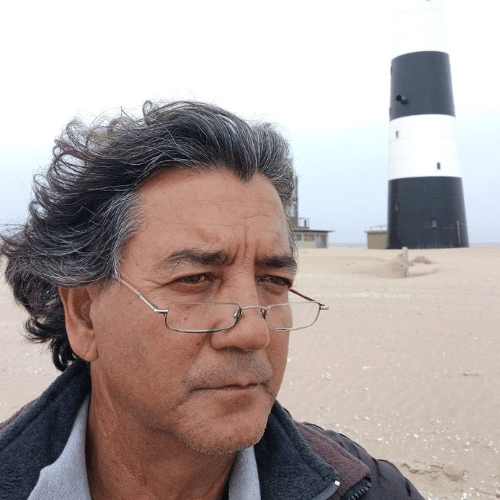
Mogamat Salie Saban, known to most simply as Saban, is a Unitrans Namibia driver based in Walvis Bay. He goes the extra mile, not only in upholding the highest safety standards, but in building meaningful connections across the communities and landscapes he moves through.
More Than a Driver
On paper, Saban covers thousands of kilometres each month across Namibia’s vast terrain. In reality, his influence stretches much further. He introduces himself not simply as a truck driver, but as a road safety ambassador. For him, patience and humility are not optional qualities. They are essential tools of the trade.
“A classroom cannot teach you patience and to be humble,” he reflects.
Experience on the road, he believes, carries responsibility. And responsibility is something to be shared. At the Walvis Bay depot, he regularly contributes to Monday safety discussions, offering lessons drawn from his own time behind the wheel. Not to instruct, but to strengthen. Not to elevate himself, but to ensure that what he has learned benefits others.
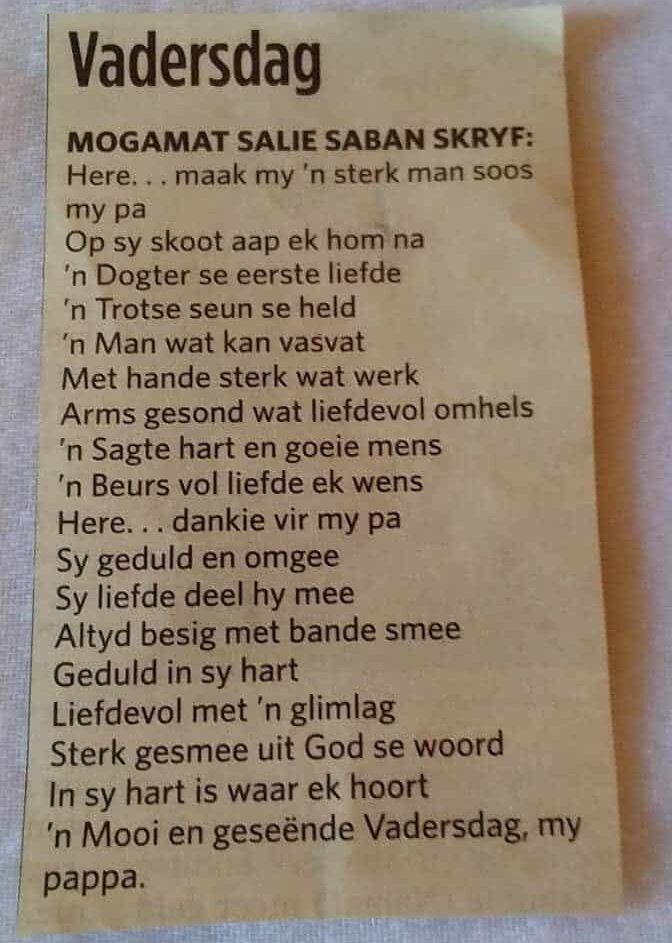
But Saban’s influence is not only technical. It is personal. He writes poetry in his quiet moments, capturing thoughts gathered along long desert stretches and coastal highways. Words, for him, are another way of carrying experience forward. Where some see miles, he sees meaning. Where some see routine, he sees reflection.
Preserving Stories, Strengthening Roots
Beyond the cab of his truck, Saban is also an author, having written two books on the history of Walvis Bay and Sandwich Harbour. The stories he documents are gathered in conversation, sitting with elderly residents who have witnessed the town’s transformation over decades. “If you want the correct version, you sit down and talk with those who lived it,” he says. In doing so, he becomes a bridge between generations. The past is not lost. It is carried forward. Carefully noted down. Preserved for those who will one day ask where it all began. His truck may move goods across the country, but in many ways, he is also moving memory.
Planting More Than Trees
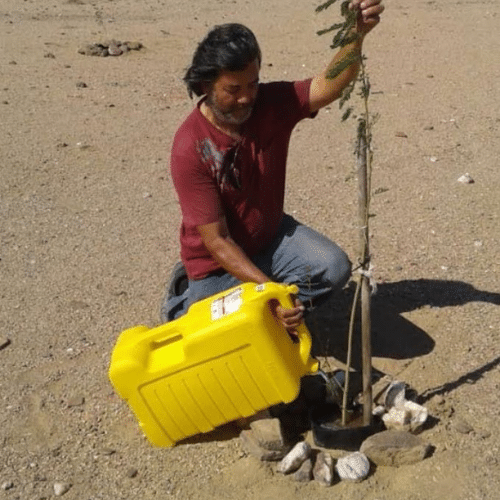
Since 2016, Saban has planted hundreds of trees along Namibia’s national roads. Some now stand more than three metres high, offering shade and shelter in stretches of desert once stripped by drought and time. Many of the saplings have been donated by local residents from across Namibia who share his belief that even small acts can restore something lasting. Seeds are gathered during stopovers. Planted at home. Replanted once strong enough to survive the open landscape. He does not claim ownership over the trees. He sees them as shared contributions to a shared environment.
At the Usakos truck stop, that same mindset has extended to planting vegetables including watermelons, sweet melons, maize, carrots and green peppers. This initiative began from a simple but pressing reality. Drivers often struggle to find healthy food options along long-distance routes. Convenience is common. Fresh produce is not. Rather than accept that as inevitable, Saban began planting vegetables to create access to something nourishing for drivers and workers passing through. The produce is grown to be shared, offering sustenance after long hours on the road. For Saban, growth is something that must benefit more than one person.
A Life Built on Connection
Before joining Unitrans, Saban trained in the South African Navy and later worked as a lighthouse keeper along Namibia’s coastline. Both roles required vigilance and discipline. Yet throughout his career, one constant has remained: a commitment to people. He volunteers within his community in neighbourhood watch initiatives and rescue support structures. He meets new faces on every route and carries their words with him.
“What your eyes take in, share it,” he says.
Every encounter becomes something to pass on. Every lesson becomes something to note down. Not for recognition. For continuity.
That same instinct to share extends beyond the road. Saban once featured on a cooking show, preparing his well-known seafood curry. For him, cooking is not performance. It is hospitality. A way of bringing people together around a table after journeys long and short. Much like his poetry and his writing, food becomes another form of connection. Another way of creating something that lasts beyond the moment.
Creating Life Along the Way
When asked how he would like to be remembered, Saban is clear. “Creating life by planting trees. Building within the community.”
He does not see himself as defined by a job title. He sees himself as part of something larger. A network of people, places and shared responsibility. Along Namibia’s open roads, small trees continue to grow. Stories continue to be preserved. Conversations continue to connect strangers. And in each of those moments, the road becomes more than a route. It becomes a link between people.
In a business built on movement, Unitrans understands that true progress is powered by people. And it is individuals like Saban who show how shared responsibility and everyday action can shape something far bigger than a single route.